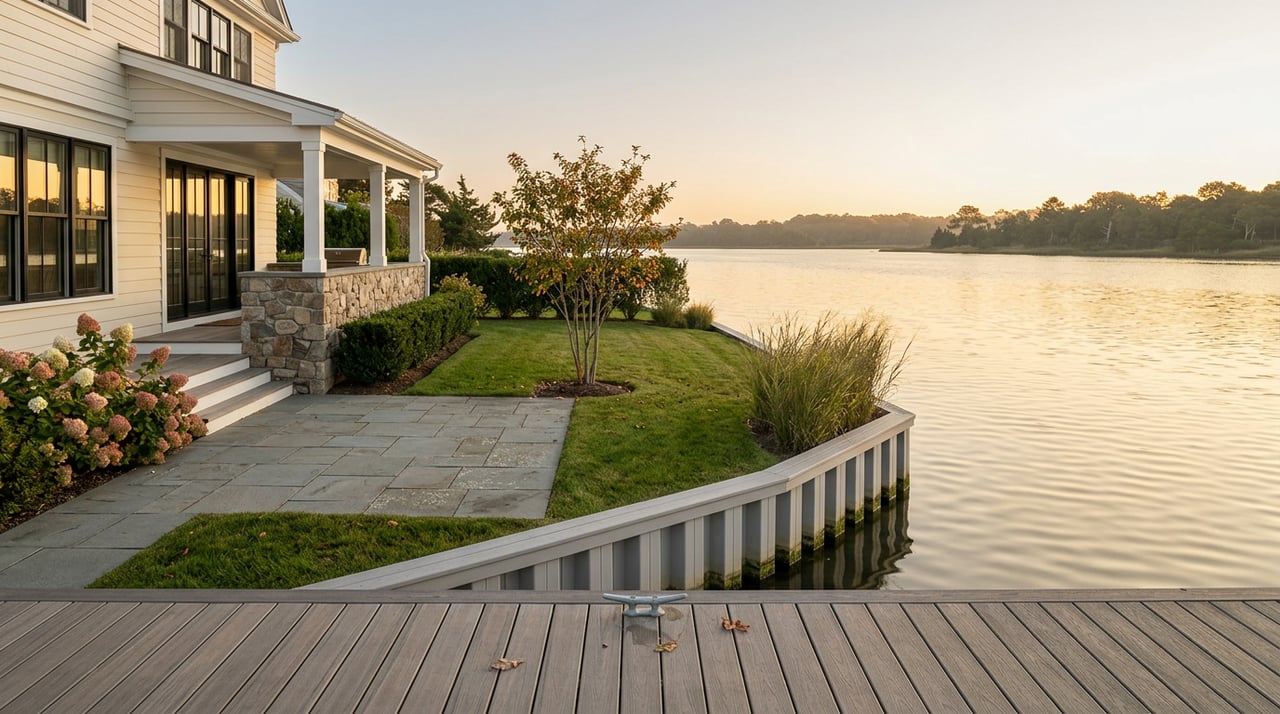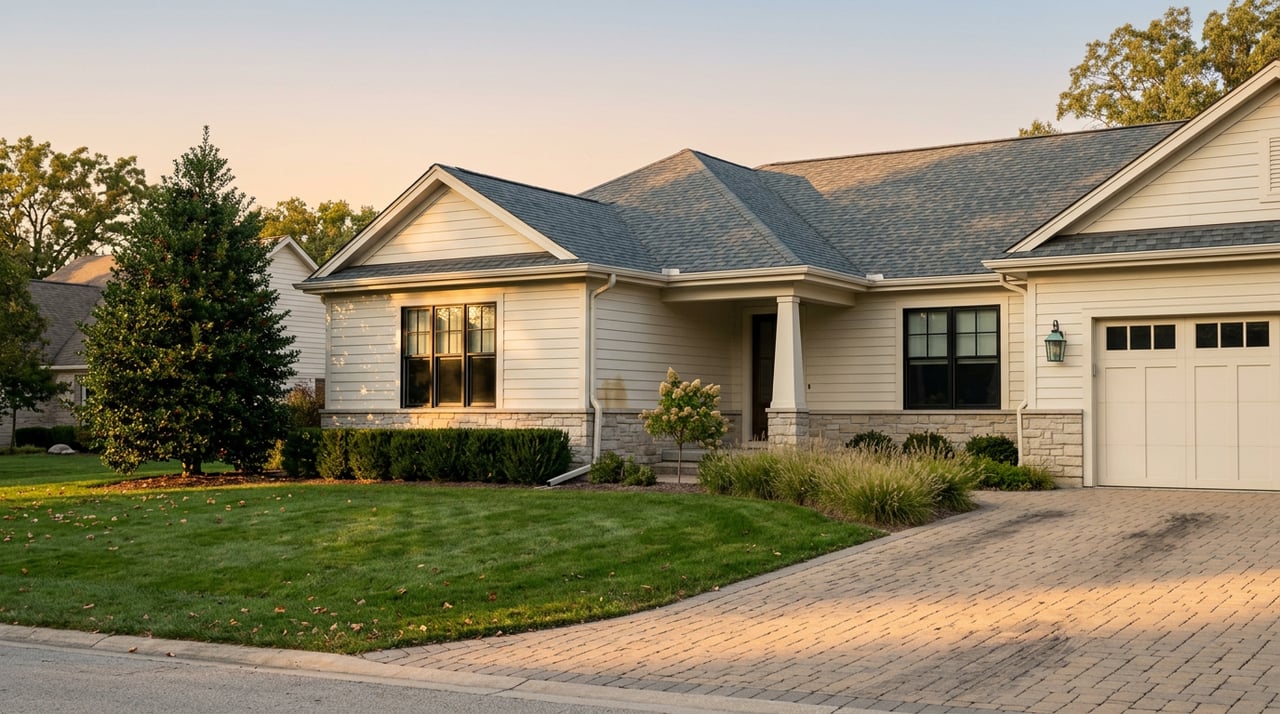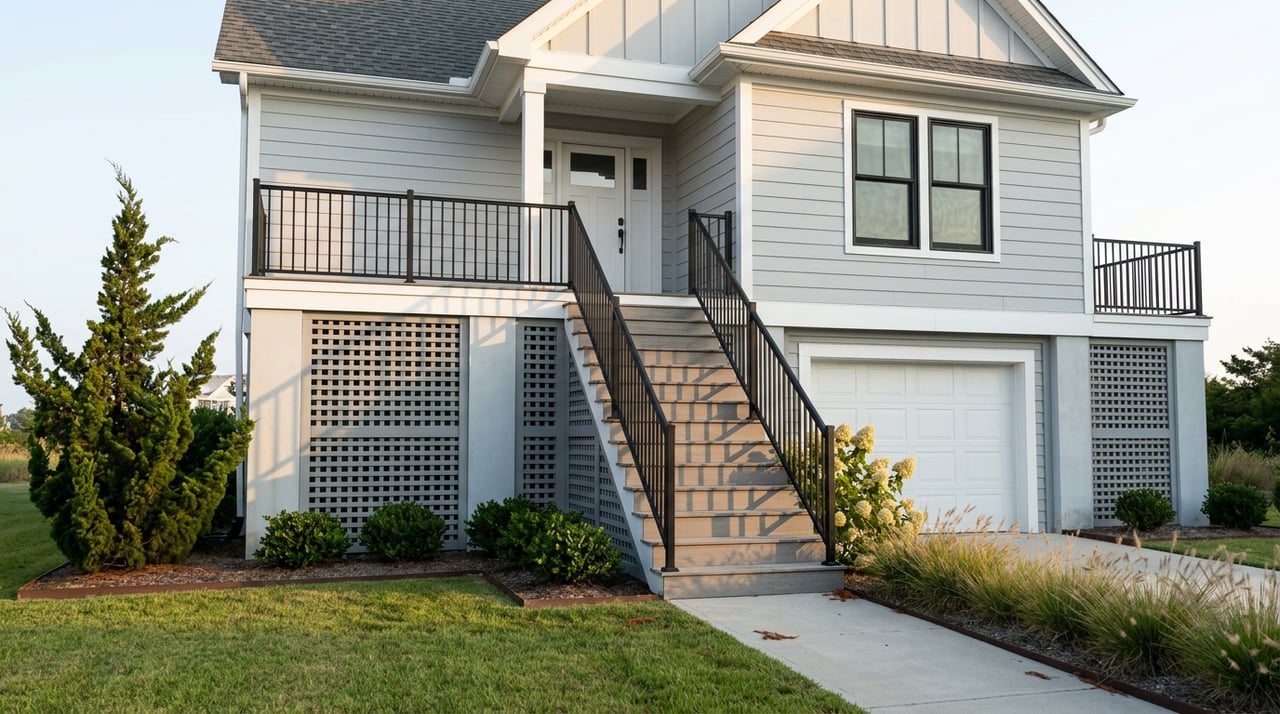
A buyer touring two homes on the same lagoon off Mill Creek Road this summer would have struggled to tell them apart. Same three-bedroom footprint, same vinyl bulkhead, same view down the canal toward Barnegat Bay. One listing had cleared its township permit in the spring. The other hadn't filed yet. On paper, the second house looked like the better deal, a little cheaper, a little more room to negotiate. What the listing sheet didn't say is that the two houses now belong to different regulatory eras, and that difference will show up on an insurance bill long before it shows up on a resale sign.
That split runs through Beach Haven West, Village Harbor, and Colony Lakes right now, and it has nothing to do with square footage or the county median. It has to do with a single date: July 20, 2026.
The Line That Split the Waterfront Stock in Half
On January 20, 2026, the New Jersey Department of Environmental Protection adopted its Resilient Environments and Landscapes rule, known around permitting offices as REAL. The rule replaces the old flood-elevation benchmark, tied to FEMA's 100-year base flood elevation, with a new Climate-Adjusted Flood Elevation that sits four feet higher. Any new construction or "substantially improved" building in a tidal flood hazard area, meaning renovation costs that exceed half the home's market value, now has to be built to that higher standard.
NJDEP built in a grace period. Projects with permit applications deemed administratively and technically complete by July 20, 2026, six months after adoption, get reviewed under the old rules. Anything filed after that date falls under the new four-foot standard. That window closed almost two months ago.
For a mainland lagoon community like Beach Haven West, where a large share of the housing stock dates back to the 1950s and 60s, this isn't an abstraction. It's the difference between a modest deck addition and a project that trips the substantial-improvement threshold and requires the whole structure to meet the new elevation. Two homeowners doing nearly identical renovations, one who filed in June and one who files this fall, are now working from different rulebooks.
Why the Older Stock Is Where This Bites Hardest
Beach Haven West was carved out of salt marsh known as Remson Meadows, purchased by developers Herbert and Jerome Shapiro in 1950. Construction started with a dredge towed up from North Carolina, and the community grew in phases starting in 1957, first between Morris Boulevard and Jennifer Lane, later out toward Jonathan Drive and Walter Boulevard, and eventually down Mill Creek Road toward East Point through the 1970s. Lincoln Properties picked up later phases and added the Colony Lakes section by 1986. More than 130 lagoons came out of that dredging, and the earliest waterfront lots sold for under $7,000 with financing around $66 a month, numbers that only make sense as a snapshot of a very different housing market.
What matters for a 2026 buyer is that most of that original stock predates any modern flood-elevation code. A lot of these bungalows have already been raised once, through Stafford Township's house-raising program or FEMA hazard mitigation grants after Superstorm Sandy. Others haven't been touched. If a current owner wants to gut-renovate one of the untouched originals, and the cost crosses the 50 percent threshold, that project now needs to hit the new four-foot standard, not the old one, because the legacy window has already closed.
This is also why the rule doesn't automatically translate into cheaper insurance. Meeting the new state elevation standard is a construction requirement, not a federal rate change. FEMA's National Flood Insurance Program rates are set independently under Risk Rating 2.0, which prices each property on its own elevation, distance to water, replacement cost, foundation type, and claims history, not on which state code it was built under. A homeowner who complies with CAFE has a more resilient house. That doesn't automatically show up as a lower premium the following year.
Why the Median Price Stopped Telling the Whole Story
Manahawkin's own sale data tells two different stories depending on which slice you look at, and the timing lines up with all of this.
| Measurement | Period | Median sale price | Change |
|---|---|---|---|
| Three-month rolling window | Ending May 2026 | $555,000 | up 1.2% year over year |
| Monthly snapshot, all home types | August 2026 | $489,676 | down 12.2% year over year |
These are two different cuts from the same source, a rolling three-month sales window versus a single-month all-home-types figure, so they aren't strictly apples to apples. But the reversal in direction across a single year is itself worth flagging. A market that looked like it was holding steady through the spring, with homes selling in 12 days on average against 35 days the year before, shifted into a noticeably softer read by late summer. That's not the pattern of a market drifting quietly in one direction. It's the pattern of a market repricing around new information, and the timing tracks almost exactly with the closing of the REAL rule's legacy window.
None of this means Manahawkin waterfront demand has collapsed. It means the county median, the number most portals lead with, is no longer the number that explains what a specific lagoon-front house will actually cost its next owner to carry.
The Insurance Number That Moves With the Permit Date
Under Risk Rating 2.0, flood insurance is priced property by property, not zone by zone. Two neighbors on the same lagoon, in the same flood zone, can carry dramatically different premiums depending on elevation, foundation type, and prior claims. Statewide, preferred-risk policies in low-risk zones can run under $500 a year, while coastal properties in high-risk zones can run well past $6,000, with bayfront homes near Long Beach Island sometimes landing even higher.
Stafford Township, which includes Manahawkin, already has a mechanism that works in the other direction. The township's participation in FEMA's Community Rating System earns residents a 25 percent discount on flood insurance premiums, a benefit tied to the municipality's own floodplain management work rather than to any individual homeowner's renovation history. A township official told a CBS New York crew that Stafford has helped around 600 homeowners through education programs and mitigation grants to elevate their houses, including one resident whose home, once sitting on two cinderblocks, now stands more than 13 feet above base flood elevation with 75 percent of the cost covered by grant funding.
That's the kind of groundwork that makes an elevated Manahawkin lagoon home a genuinely different asset than an unelevated one nearby, discount and all. It also means the town isn't standing still on infrastructure. Stafford put out a 2026 bid for the Manahawkin Lake Park Bulkhead Replacement Project this spring, swapping 173 linear feet of aging timber bulkhead for vinyl. Shoreline infrastructure keeps getting reinvested in even as individual homeowners work through a more complicated permitting picture.
What to Ask Before You Write an Offer
A lagoon-front listing in Beach Haven West, Village Harbor, or Colony Lakes can look move-in ready and still carry a very different cost profile than the comparable two doors down. Before making an offer, it's worth asking the listing agent or seller for:
- The home's current elevation certificate, and the date it was issued
- Whether any permits for additions, raises, or major renovations were filed before or after July 20, 2026
- The condition and ownership responsibility for the bulkhead, since waterfront work is regulated separately from the house itself
- Whether the property currently benefits from Stafford Township's CRS discount on flood insurance
- A current flood insurance quote under Risk Rating 2.0, not last year's premium, since rates are recalculated to the specific property
None of this shows up cleanly on a listing sheet. It shows up in permit records, elevation certificates, and insurance quotes, which is exactly why it's worth pulling before a contract, not after.
A Few Direct Questions
Does the REAL rule apply if I'm buying a home as-is and don't plan to renovate? Not directly. The rule governs new construction and substantial improvements, defined as work that costs more than half the home's market value. A home you buy and use without major structural changes isn't triggered into the new standard just by changing hands.
If my future renovation meets the new elevation standard, will my flood insurance go down? Not automatically. NJDEP's own guidance is clear that the REAL rule is a state construction standard, while flood insurance premiums are set separately by FEMA under Risk Rating 2.0. Meeting CAFE can support a stronger property profile, but any rate change comes from the federal side, not the state rule itself.
What if a home was permitted before July 20, 2026? Projects deemed technically complete by that date are reviewed under the prior elevation standard rather than the new four-foot benchmark, under the rule's legacy provision. Ask for the permit paperwork and date directly rather than assuming based on the home's age.
Manahawkin's lagoon communities have absorbed regulatory change before, from post-Sandy elevation grants to today's REAL rule, and the houses that come out the other side tend to be the ones with clear paperwork and a real understanding of where they sit relative to that July deadline. If you're weighing a purchase or a sale on the water in Manahawkin, Camille Simms can walk through a specific property's permit history, elevation status, and current insurance picture before you write an offer. Request your free home estimate and marketing plan to get that conversation started.