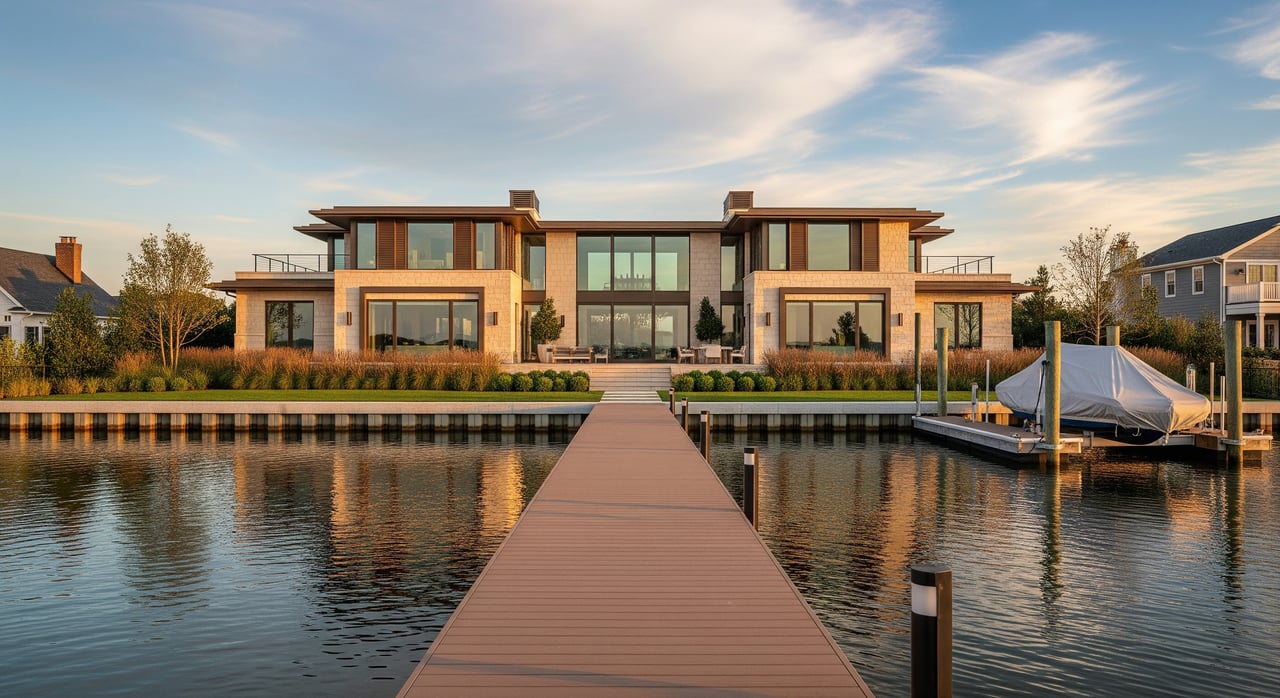
Ever pictured your Brick Township backyard opening to calm water where you can launch a kayak before breakfast? Many buyers do, then wonder if they need bayfront to make it happen. In Brick, a lagoon home can deliver the waterfront lifestyle without the constant wind and waves of open bay living. In this guide, you’ll learn what a lagoon home is, how it compares to bayfront and canal properties, what boat access really looks like, key permitting and flood topics, lifestyle trade-offs, and a practical buyer checklist. Let’s dive in.
Lagoon homes explained
A lagoon home sits on a small, protected waterbody that connects to Barnegat Bay through a narrow channel, culvert, bridge opening, or small inlet. Around Brick Township, people use “lagoon” for quiet inland waterways created from natural marsh features or engineered basins in waterfront neighborhoods. You get water in your backyard, but not direct exposure to the open bay.
Lagoons are usually smaller and narrower than canals and bay inlets. Many are dead-end or have very limited through passage, which keeps traffic and wake down. Depth varies widely from one lagoon to the next, and some are shallower than nearby canals or marked bay channels. You will often see bulkheads, seawalls, finger piers, and private docks as common improvements.
Ownership is typically riparian lots with private docks or slips on each parcel. In some neighborhoods, homeowners share docks or participate in an association that sets rules for boat size, slip usage, and maintenance. The details are usually in your deed, municipal ordinances, or HOA documents.
Lagoon vs bayfront vs canal
Bayfront at a glance
Bayfront properties sit right on Barnegat Bay. They offer immediate access to open water and deeper navigation channels, which is ideal for larger boats. You also experience more wind, wave action, and tidal current along with higher storm surge exposure. Building standards and insurance needs can be more intense because many bayfront parcels sit in higher-velocity coastal flood zones.
Canal at a glance
Canal properties line excavated channels designed for boat travel, often laid out in grids that lead directly to the bay. Canals tend to have more uniform depths and better flushing than most lagoons. They are protected compared to bayfront, yet still convenient for moderate-sized powerboats that want straightforward slips-to-bay access.
How lagoon living differs
Lagoon homes trade deep-water access for calm water and privacy. Many connections to the bay are narrow or shallow, and some have fixed bridges that limit clearance. Smaller powerboats, center consoles with modest draft, runabouts, kayaks, and paddle craft are usually the best fit. The quieter setting means less wake and boat traffic, but you may time trips around the tide if depths are tight.
Which one fits your goals
- Choose bayfront if you want big views, immediate open-water cruising, and have a deeper-draft vessel.
- Choose canal if you want practical boat navigation, regular depths, and faster routes to the bay without the exposure of bayfront.
- Choose lagoon if you value a quieter backyard water experience, plan to use smaller boats or paddle craft, and prefer sheltered conditions.
Boating from a lagoon in Brick
Most Brick Township lagoons connect to Barnegat Bay through narrow channels or under-road culverts. The depth, width, and any fixed bridges along the route determine what boats can pass and when. Lagoons are tidal, and some are more tidal than others, so low tide often becomes the limiting factor for draft.
For boat owners, the details matter. Measure or verify channel depth at mean low water, and note any fixed bridge clearances on your route to the bay. Many owners plan trips around the tide to avoid scraping bottom or waiting out shallow stretches. Private docks in lagoons tend to be smaller, and association docks may cap boat length, beam, or horsepower.
If you keep a larger boat or want haul-out services, plan on using a public ramp or a nearby marina for trailer launching and seasonal service. Local marina managers, neighborhood associations, and experienced boaters are great sources for current depth, dredging history, and navigation tips. Tide tables and nautical charts help you plan around the shallows and choose the best departure window.
Permits, flood and environmental basics
Waterfront work in Brick Township triggers multiple layers of review. For docks, bulkheads, seawalls, and in-water construction, you typically need permits from the New Jersey Department of Environmental Protection. Many projects also fall under U.S. Army Corps of Engineers jurisdiction. Brick Township zoning and building permits apply to most structures, and local ordinances may set standards for docks and bulkheads. If a property uses a septic system near tidal water, county health rules may come into play.
Flood risk is part of the decision. Lagoon and bay-adjacent properties are often within FEMA flood zones such as A, AE, V, or VE. The base flood elevation drives building requirements and strongly influences insurance premiums. Your lender may require flood insurance if the home sits in a high-risk zone. Always review current FEMA maps and ask for recent elevation certificates when available.
Riparian rights define how you may access the water and where ownership ends, often near the bulkhead or mean high-water line. Maintenance of bulkheads and docks is usually the owner’s responsibility. Bulkhead repair, piling replacement, and small-scale dredging can be costly and may require approvals, so build a budget for long-term upkeep.
Lagoons are environmentally sensitive. Limited flushing can reduce water quality at times, contributing to algae blooms or low dissolved oxygen. Sensitive habitats like wetlands and submerged aquatic vegetation are regulated. Stormwater upgrades and sewer or septic modernization may be part of neighborhood improvement efforts over time.
Lifestyle pros and cons
Lagoon living offers a peaceful waterfront feel without the constant exposure of the bay. You can paddle at sunrise, fish from your dock, and enjoy a quieter backyard on most days. If you prioritize serenity and casual boating over big water and big vessels, the trade-off often feels worth it.
Potential downsides come from access limits and maintenance. Shallow water and narrow passages may restrict boat size and timing. Some lagoon neighborhoods have association rules on boat length or dock use. Periodic dredging may be required to keep water depth navigable, and the owner pays to maintain bulkheads and docks. Flood risk and storm surge still apply to many lagoon streets.
Buyer checklist for lagoon listings
Use this list to evaluate a specific property before you make an offer. Lagoon conditions are very local, so verify each item at the parcel level.
- Exact water access. Confirm the connection to Barnegat Bay, channel width, depth at mean low and mean high water, and any fixed bridge clearances along your route.
- Dock and bulkhead details. Check permit status, age and condition, piling and bulkhead integrity, and any open violations.
- Deed and riparian rights. Review where ownership ends and what rights and limits apply at the water line.
- Flood zone and elevations. Look up the current FEMA designation, obtain recent elevation data, and price out likely insurance costs.
- Utilities and sewer. Confirm municipal sewer versus septic and any required upgrades that affect the shoreline environment.
- HOA or association rules. Ask about boat size limits, slip assignments, dredging plans, shared maintenance, and any fees or assessments.
- Environmental notes. Review local water quality advisories, shellfish closures, or habitat protections that could affect use or permits.
- Dredging or public works. Check for scheduled municipal dredging, bulkhead replacement programs, or road and bridge work that could affect access.
- Marina and storage options. Identify the nearest full-service marina, haul-out, and winter storage options if your vessel exceeds the lagoon’s limits.
- Survey and elevation certificate. Get a current survey to confirm boundaries at the water and an elevation certificate to inform insurance and future permitting.
Brick Township resources and next steps
When you narrow to a few addresses, line up your homework. Tide charts and nautical maps help you understand draft and timing. FEMA’s flood map tools show zones and base flood elevations. NJDEP and the U.S. Army Corps provide permit guidance for waterfront work, while Brick Township’s building and zoning offices can confirm local standards. Barnegat Bay water-quality programs publish monitoring and restoration updates, and Ocean County can point you to public ramps and boating information. Local marina managers and neighborhood associations give you on-the-ground insight about depths and dredging schedules.
If a lagoon home fits your lifestyle, connect with a local expert who knows these streets and waterways. I represent buyers throughout the Barnegat Bay corridor and Ocean County waterfront neighborhoods, and my team pairs neighborhood-level knowledge with a streamlined, tech-enabled process. From vetted vendor referrals to elevation and permit guidance, you will feel informed at every step. When you are ready to compare lagoon, canal, and bayfront options, reach out to Camille Simms for a personalized tour plan and market guidance.
FAQs
What is a lagoon home in Brick Township?
- A lagoon home fronts a small, protected waterway that connects to Barnegat Bay through a narrow channel or culvert, offering backyard docks and calm water rather than open bay exposure.
How do lagoon homes compare to bayfront and canal homes?
- Bayfront has direct open-water access and deeper channels with more exposure, canals are designed for navigation with more uniform depths, and lagoons are quieter with more limited and often shallower access.
What boat sizes typically work in Brick Township lagoons?
- Smaller powerboats, modest center consoles, runabouts, and paddle craft usually fit best because many lagoons are shallow and may have narrow channels or fixed bridge limits.
Do lagoon homes in Brick Township require flood insurance?
- Many lagoon properties are within FEMA flood zones where lenders require flood insurance, and elevation relative to base flood elevation affects cost and building requirements.
What permits do I need to build or repair a dock?
- Waterfront work often needs NJDEP permits, possible U.S. Army Corps approvals, and Brick Township building and zoning permits that set standards for docks and bulkheads.
Who maintains bulkheads and docks at lagoon homes?
- Shoreline owners are typically responsible for bulkhead and dock upkeep, and repairs or dredging may require permits and can be significant budget items.